
 Shop
Shop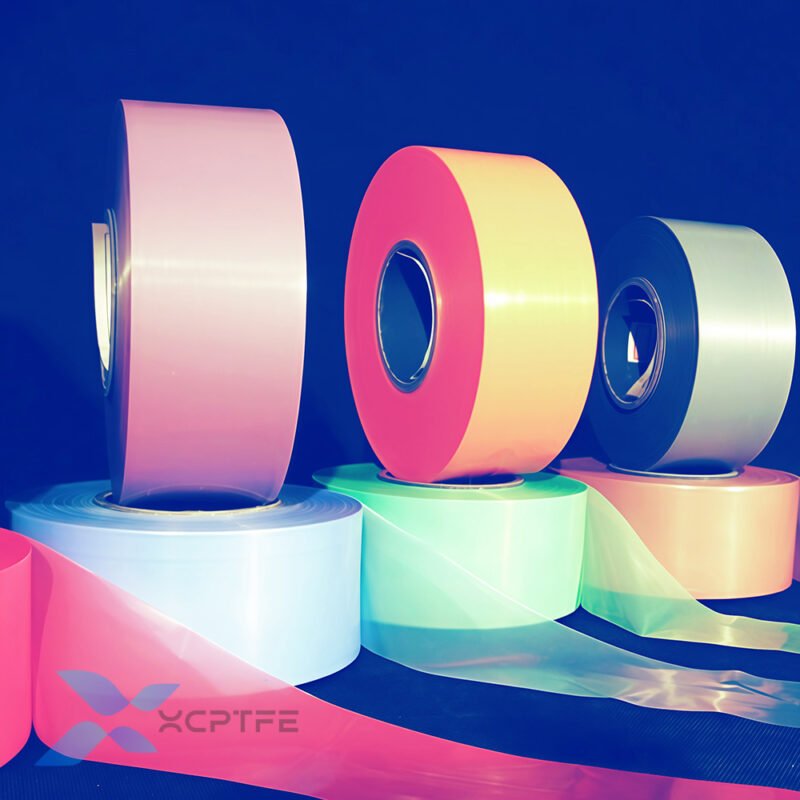
Custom Non-stick Colored PTFE Film
- Resistant to all strong acids, alkalis, oxidants and organic solvents including hydrofluoric acid.
- Smooth surface, extremely low friction coefficient, not adhere to any substances, easy to clean.
- Long time working temperature between -200°C and +260°C. Short working time at 300°C
- High purity & not contaminate experimental samples.
- Soft texture, good toughness, not easy to break but cutting and scratching.
Item No.: 2511616
Description
Introducing our custom colored PTFE film, a versatile and high-performance solution designed for both functional and aesthetic applications. This premium PTFE film is engineered to provide the same exceptional non-stick, chemical-resistant, and high-temperature properties you expect, now available in a range of vibrant custom colors. Whether you need a bright red PTFE film for safety coding or a calm blue PTFE film for brand identification, we can match your exact specifications.
Also known as Teflon film, our color PTFE film is ideal for applications where visual appeal meets demanding performance requirements. The superior surface of this non stick PTFE film ensures easy release and minimal contamination, making it perfect for food processing, packaging, and industrial laminating. For convenient application, this product can also be supplied as a versatile PTFE film tape with various adhesive backings. Beyond standard offerings, we specialize in creating custom solutions, allowing you to select the exact hue, thickness, and form factor for your unique project. Enhance your product’s functionality and visibility with our durable, custom-colored PTFE films.
Precautions:
Mechanical protection (anti creep&anti wear)
Adequate support is necessary: PFA pipes are softer than metal, and the support spacing should be shorter to prevent sagging and deformation.
Strictly prohibit over tightening: When connecting flanges, a torque wrench must be used and tightened evenly in diagonal order. Excessive tightening can lead to material “cold flow” (permanent deformation), resulting in leakage.
Pay attention to wear resistance: When transporting fluids containing solid particles, high flow rates can erode and wear the pipe wall. Wear resistance needs to be evaluated, and if necessary, thicker wall pipes or more wear-resistant materials should be selected.
Hot operation (anti decomposition&anti deformation)
Must be hot bent: PFA pipes must be uniformly heated to a soft and transparent temperature (approximately 200 ° C) using a hot air gun before bending. Cold bending is strictly prohibited, otherwise it may crack or collapse.
Open flame taboo: It is strictly prohibited to use open flames during heating, otherwise it will cause local overheating and lead to material decomposition and deterioration.
High temperature pressure reduction: PFA’s mechanical strength will decrease at high temperatures (such as>150 ° C). The system operating pressure should be reduced according to the temperature pressure curve, and room temperature pressure rating should not be used at high temperatures.
Installation specifications (stress prevention&sealing protection)
Smooth incision: A specialized pipe cutter is required to cut the pipeline, ensuring that the incision is smooth, vertical, and free of burrs. Rough incisions are the starting point of stress cracking.
Compensating for thermal expansion: PFA has a high coefficient of thermal expansion, which is more than 10 times that of metals. The pipeline system must be designed with expansion joints, U-bends, or flexible hoses to absorb thermal displacement and prevent damage to equipment interfaces.
Safety and Compatibility (Leak Prevention&Security Protection)
Good ventilation: PFA will decompose and release highly toxic smoke at extremely high temperatures (>300 ° C). All hot processing (such as hot melt welding) must be carried out in a well ventilated area.
Confirm compatibility: Although PFA is resistant to the vast majority of chemicals, it is still necessary to confirm its compatibility with specific chemical media in your process, especially at high temperatures.
Purity control (pollution prevention)
Clean installation: For high-purity applications such as semiconductors and pharmaceuticals, it is necessary to keep the interior of the pipeline clean during the installation process to avoid external contamination caused by gloves, tools, etc. After installation, cleaning and testing should be carried out.
Adequate support is necessary: PFA pipes are softer than metal, and the support spacing should be shorter to prevent sagging and deformation.
Strictly prohibit over tightening: When connecting flanges, a torque wrench must be used and tightened evenly in diagonal order. Excessive tightening can lead to material “cold flow” (permanent deformation), resulting in leakage.
Pay attention to wear resistance: When transporting fluids containing solid particles, high flow rates can erode and wear the pipe wall. Wear resistance needs to be evaluated, and if necessary, thicker wall pipes or more wear-resistant materials should be selected.
Hot operation (anti decomposition&anti deformation)
Must be hot bent: PFA pipes must be uniformly heated to a soft and transparent temperature (approximately 200 ° C) using a hot air gun before bending. Cold bending is strictly prohibited, otherwise it may crack or collapse.
Open flame taboo: It is strictly prohibited to use open flames during heating, otherwise it will cause local overheating and lead to material decomposition and deterioration.
High temperature pressure reduction: PFA’s mechanical strength will decrease at high temperatures (such as>150 ° C). The system operating pressure should be reduced according to the temperature pressure curve, and room temperature pressure rating should not be used at high temperatures.
Installation specifications (stress prevention&sealing protection)
Smooth incision: A specialized pipe cutter is required to cut the pipeline, ensuring that the incision is smooth, vertical, and free of burrs. Rough incisions are the starting point of stress cracking.
Compensating for thermal expansion: PFA has a high coefficient of thermal expansion, which is more than 10 times that of metals. The pipeline system must be designed with expansion joints, U-bends, or flexible hoses to absorb thermal displacement and prevent damage to equipment interfaces.
Safety and Compatibility (Leak Prevention&Security Protection)
Good ventilation: PFA will decompose and release highly toxic smoke at extremely high temperatures (>300 ° C). All hot processing (such as hot melt welding) must be carried out in a well ventilated area.
Confirm compatibility: Although PFA is resistant to the vast majority of chemicals, it is still necessary to confirm its compatibility with specific chemical media in your process, especially at high temperatures.
Purity control (pollution prevention)
Clean installation: For high-purity applications such as semiconductors and pharmaceuticals, it is necessary to keep the interior of the pipeline clean during the installation process to avoid external contamination caused by gloves, tools, etc. After installation, cleaning and testing should be carried out.