
 Shop
Shop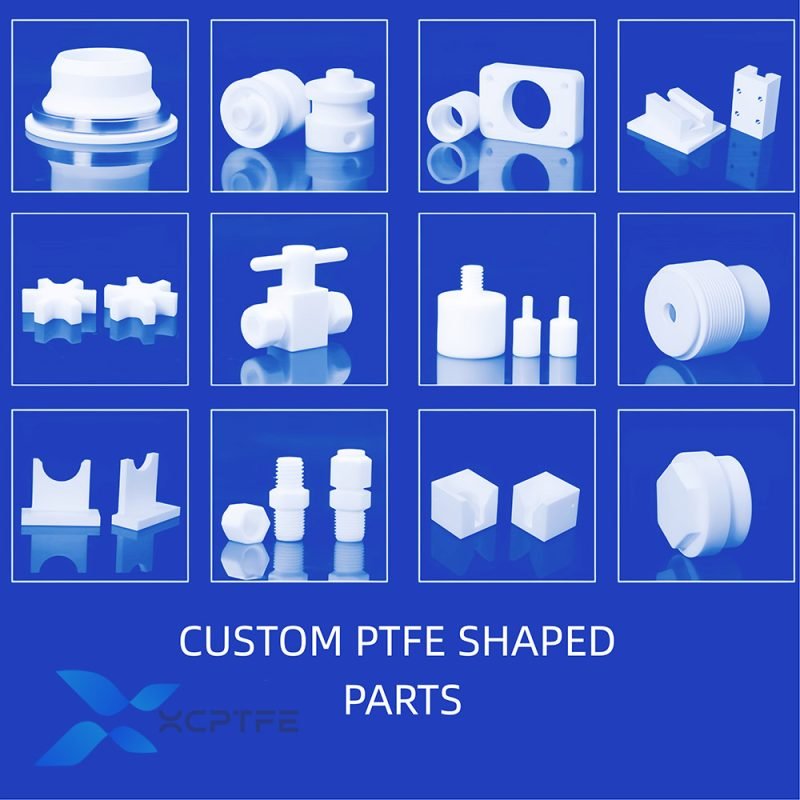
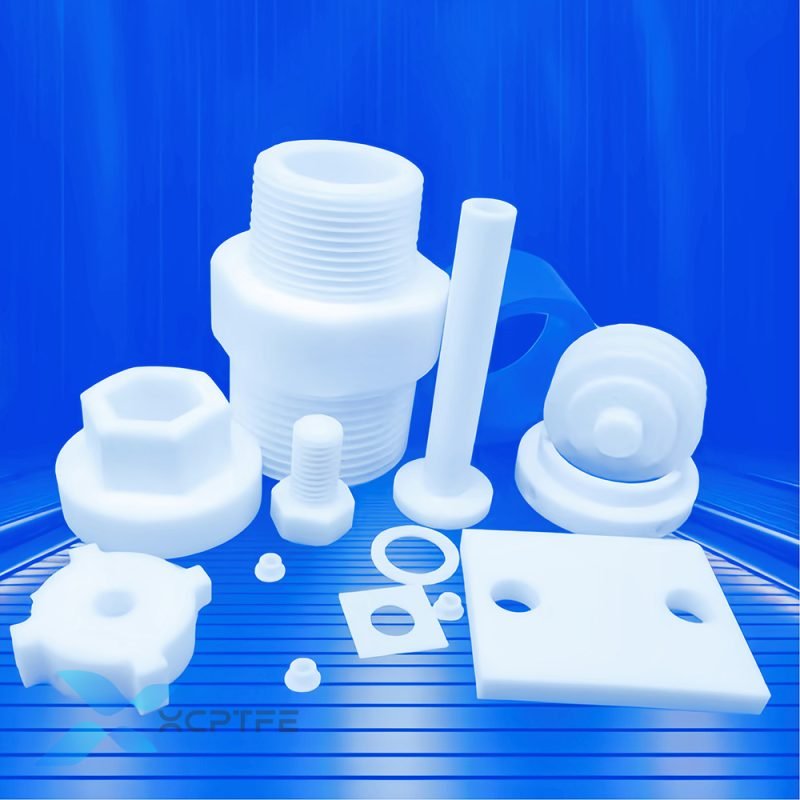
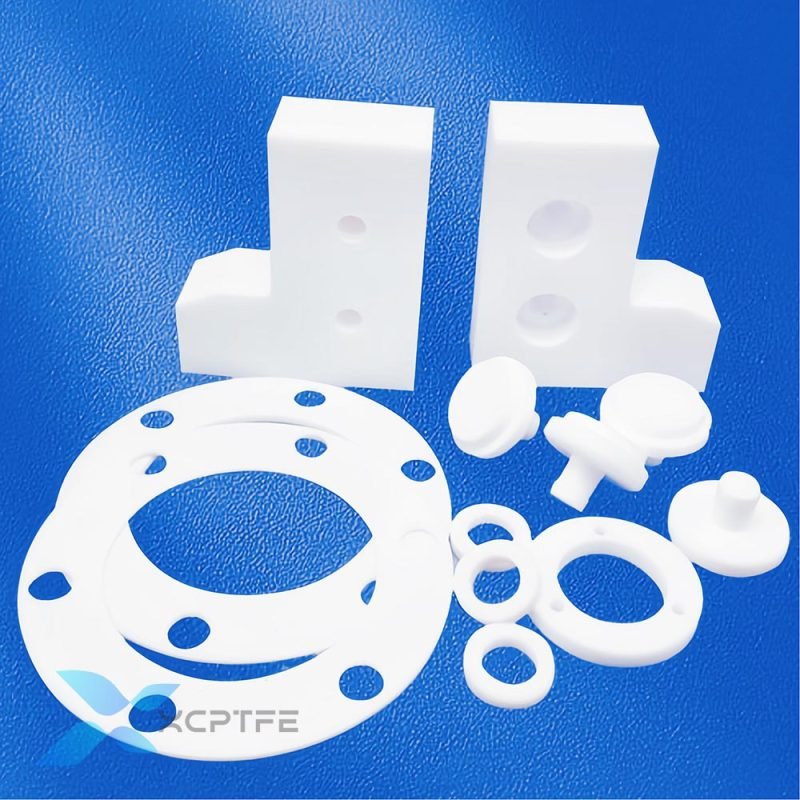
Custom Teflon Shaped Parts & Machining PTFE Prototypes
- Resistant to all strong acids, alkalis, oxidants and organic solvents including hydrofluoric acid.
- Smooth surface, extremely low friction coefficient, not adhere to any substances, easy to clean.
- Long time working temperature between -200°C and +260°C. Short working time at 300°C
- High purity & not contaminate experimental samples.
- Soft texture, good toughness, not easy to break but cutting and scratching.
Item No.: C2595172
Description
We are a professional PTFE component manufacturer, dedicated to designing and producing high-performance fluoropolymer solutions for our customers. Our core business is to provide customized services for PTFE custom parts and PTFE custom shaped parts, committed to meeting the demanding requirements of high-end industries such as semiconductors, chemicals, and aerospace for special and complex parts.
We rely on advanced precision PTFE machining service capabilities to ensure precise size and reliable performance of each component. Our factory has comprehensive PTFE CNC machining capabilities in China, which can efficiently complete the entire manufacturing process from PTFE prototypes and production, helping customers quickly transform their ideas from drawings to physical objects.
In addition to PTFE (polytetrafluoroethylene), we also offer PFA machining services to meet application scenarios that require higher transparency and equivalent excellent chemical resistance. Whether it’s complex Teflon custom parts (Teflon is a common trade name for PTFE) or other engineering plastic components, our technical team can provide you with a one-stop customized solution from material selection to finished product delivery.
Precautions:
Mechanical protection (anti creep&anti wear)
Adequate support is necessary: PFA pipes are softer than metal, and the support spacing should be shorter to prevent sagging and deformation.
Strictly prohibit over tightening: When connecting flanges, a torque wrench must be used and tightened evenly in diagonal order. Excessive tightening can lead to material “cold flow” (permanent deformation), resulting in leakage.
Pay attention to wear resistance: When transporting fluids containing solid particles, high flow rates can erode and wear the pipe wall. Wear resistance needs to be evaluated, and if necessary, thicker wall pipes or more wear-resistant materials should be selected.
Hot operation (anti decomposition&anti deformation)
Must be hot bent: PFA pipes must be uniformly heated to a soft and transparent temperature (approximately 200 ° C) using a hot air gun before bending. Cold bending is strictly prohibited, otherwise it may crack or collapse.
Open flame taboo: It is strictly prohibited to use open flames during heating, otherwise it will cause local overheating and lead to material decomposition and deterioration.
High temperature pressure reduction: PFA’s mechanical strength will decrease at high temperatures (such as>150 ° C). The system operating pressure should be reduced according to the temperature pressure curve, and room temperature pressure rating should not be used at high temperatures.
Installation specifications (stress prevention&sealing protection)
Smooth incision: A specialized pipe cutter is required to cut the pipeline, ensuring that the incision is smooth, vertical, and free of burrs. Rough incisions are the starting point of stress cracking.
Compensating for thermal expansion: PFA has a high coefficient of thermal expansion, which is more than 10 times that of metals. The pipeline system must be designed with expansion joints, U-bends, or flexible hoses to absorb thermal displacement and prevent damage to equipment interfaces.
Safety and Compatibility (Leak Prevention&Security Protection)
Good ventilation: PFA will decompose and release highly toxic smoke at extremely high temperatures (>300 ° C). All hot processing (such as hot melt welding) must be carried out in a well ventilated area.
Confirm compatibility: Although PFA is resistant to the vast majority of chemicals, it is still necessary to confirm its compatibility with specific chemical media in your process, especially at high temperatures.
Purity control (pollution prevention)
Clean installation: For high-purity applications such as semiconductors and pharmaceuticals, it is necessary to keep the interior of the pipeline clean during the installation process to avoid external contamination caused by gloves, tools, etc. After installation, cleaning and testing should be carried out.
Adequate support is necessary: PFA pipes are softer than metal, and the support spacing should be shorter to prevent sagging and deformation.
Strictly prohibit over tightening: When connecting flanges, a torque wrench must be used and tightened evenly in diagonal order. Excessive tightening can lead to material “cold flow” (permanent deformation), resulting in leakage.
Pay attention to wear resistance: When transporting fluids containing solid particles, high flow rates can erode and wear the pipe wall. Wear resistance needs to be evaluated, and if necessary, thicker wall pipes or more wear-resistant materials should be selected.
Hot operation (anti decomposition&anti deformation)
Must be hot bent: PFA pipes must be uniformly heated to a soft and transparent temperature (approximately 200 ° C) using a hot air gun before bending. Cold bending is strictly prohibited, otherwise it may crack or collapse.
Open flame taboo: It is strictly prohibited to use open flames during heating, otherwise it will cause local overheating and lead to material decomposition and deterioration.
High temperature pressure reduction: PFA’s mechanical strength will decrease at high temperatures (such as>150 ° C). The system operating pressure should be reduced according to the temperature pressure curve, and room temperature pressure rating should not be used at high temperatures.
Installation specifications (stress prevention&sealing protection)
Smooth incision: A specialized pipe cutter is required to cut the pipeline, ensuring that the incision is smooth, vertical, and free of burrs. Rough incisions are the starting point of stress cracking.
Compensating for thermal expansion: PFA has a high coefficient of thermal expansion, which is more than 10 times that of metals. The pipeline system must be designed with expansion joints, U-bends, or flexible hoses to absorb thermal displacement and prevent damage to equipment interfaces.
Safety and Compatibility (Leak Prevention&Security Protection)
Good ventilation: PFA will decompose and release highly toxic smoke at extremely high temperatures (>300 ° C). All hot processing (such as hot melt welding) must be carried out in a well ventilated area.
Confirm compatibility: Although PFA is resistant to the vast majority of chemicals, it is still necessary to confirm its compatibility with specific chemical media in your process, especially at high temperatures.
Purity control (pollution prevention)
Clean installation: For high-purity applications such as semiconductors and pharmaceuticals, it is necessary to keep the interior of the pipeline clean during the installation process to avoid external contamination caused by gloves, tools, etc. After installation, cleaning and testing should be carried out.