
 Shop
ShopHow PFA is Powering the Semiconductor and Biopharma Revolutions
26
Feb
Feb
In the world of high-tech manufacturing, what you don‘t find in the product often matters as much as what you do. For the semiconductor chips powering AI and the biologic drugs revolutionizing healthcare, the presence of a single metallic contaminant or a microscopic particle can mean total failure. This is where PFA (Perfluoroalkoxy), often referred to as melt-processable Teflon™, transitions from being just another plastic to becoming a critical enabler of modern technology .
The Unmatched Purity Mandate
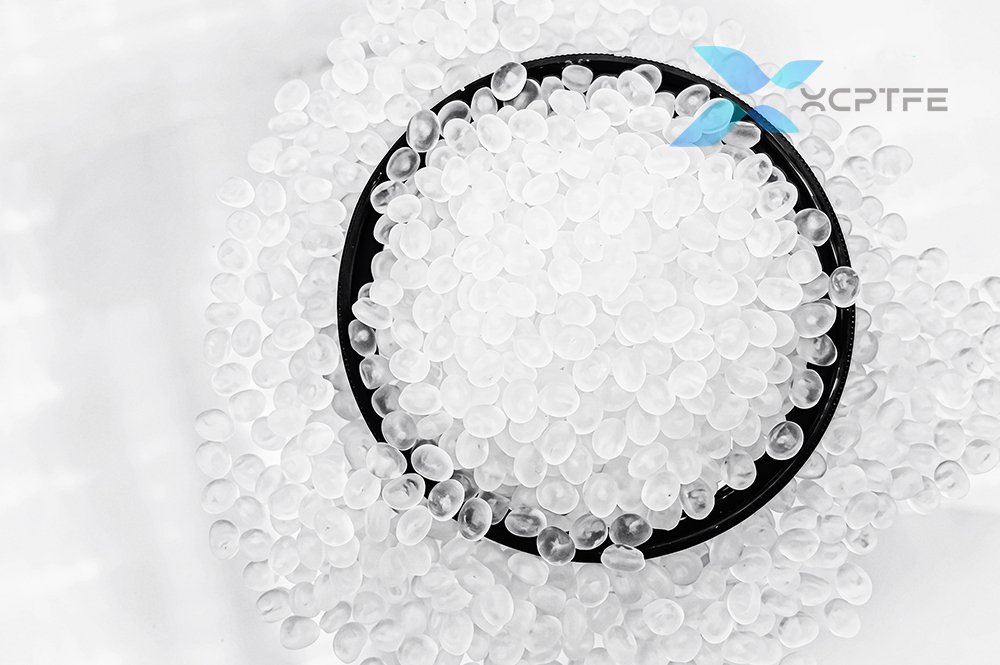
At its core, PFA is a fluoropolymer belonging to the same family as PTFE. However, its unique copolymer structure provides a distinct advantage: it can be melt-processed, allowing for the creation of complex, seamless components with ultra-smooth surfaces. For semiconductor and medical applications, the key performance indicators are metal ion extraction and surface smoothness. High-purity PFA grades, such as those produced by Chemours or Daikin, boast metal ion extraction levels below 0.1 ppb (parts per billion) . When tested with sensitive equipment like ICP-MS (Inductively Coupled Plasma Mass Spectrometry), components made from these resins confirm that they do not leach contaminants into the ultra-pure fluids they carry .
PFA in Semiconductor Manufacturing
In a semiconductor fab, PFA is the material of choice for wet processing—the series of steps where wafers are cleaned, etched, and stripped using aggressive chemistries. PFA tubes, valves, and fittings are the “veins” of the fab, transporting highly corrosive media like hydrofluoric acid, sulfuric acid, and hydrogen peroxide at temperatures ranging from cryogenic conditions to over 260°C .
As chip geometries shrink to 3nm and below, the tolerance for defects approaches zero. PFA’s inertness ensures that the chemical baths used for etching retain their precise composition without being altered by the container . In critical processes like Chemical Mechanical Polishing (CMP), PFA tubing prevents nano-sized abrasive particles from adhering to the pipe walls, ensuring consistent slurry delivery and uniform wafer polishing . The material is so vital that Chinese national standards are now being developed specifically for PFA piping systems used in semiconductor fabrication to secure the domestic supply chain .
The Biopharmaceutical Backbone
The medical and biopharmaceutical sectors demand equally stringent standards, but the focus shifts slightly toward biocompatibility and sterilization. PFA is widely specified in bioprocessing equipment, where it is used to transfer cell cultures, buffer solutions, and final drug products.
Its compliance with FDA 21 CFR 177.1550 and USP Class VI makes it suitable for direct contact with injectable drugs and blood . In the production of monoclonal antibodies or gene therapies, leachables and extractables can compromise drug efficacy or trigger immune responses. PFA’s inertness protects the integrity of these high-value biologics. Furthermore, its ability to withstand repeated cycles of Steam-in-Place (SIP) sterilization and aggressive Clean-in-Place (CIP) chemicals without degrading ensures that manufacturers can maintain sterile environments without wearing out their fluid pathways .
Future Outlook and Innovation
The market for high-purity PFA is projected to grow significantly, driven by the expansion of semiconductor capacity and the rise of personalized medicine . We are now seeing the emergence of “smart” PFA components with embedded sensors for predictive maintenance, as well as advanced composite materials designed to withstand the extreme pressures required for 500+ layer 3D NAND chips . As industries continue to push the boundaries of miniaturization and biological complexity, the silent, clean flow provided by PFA will remain indispensable.