
 Shop
ShopA Guide to Fluoroplastic Processing, Characteristics, and Applications
Apr
- The characteristics of fluoroplastics
Fluoroplastics are a special type of synthetic resin, made from polytetrafluoroethylene as the main raw material. Compared to conventional plastics, fluoroplastics exhibit several distinct characteristics.
- Strong corrosion resistance
Fluoroplastics are renowned for their exceptional corrosion resistance, making them ideal for prolonged use in corrosive media such as strong acids, strong alkalis, and oxidants without incurring any damage.
- Excellent ageing resistance
Fluoroplastics contain a large number of fluorine atoms in their molecules, resulting in relatively stable molecular chains that do not decompose or age during long-term use.
- Strong heat resistance
Fluoroplastics have excellent high-temperature resistance and can still maintain their plastic properties at high temperatures.
- Good insulation property
Fluoroplastics are renowned for their excellent insulation properties, enabling prolonged use under high pressure without damage to the insulation.
- The processing methods of fluoroplastics
The processing of fluoroplastics differs from that of common plastics. The following are the common processing methods for fluoroplastics:
- Compression molding method
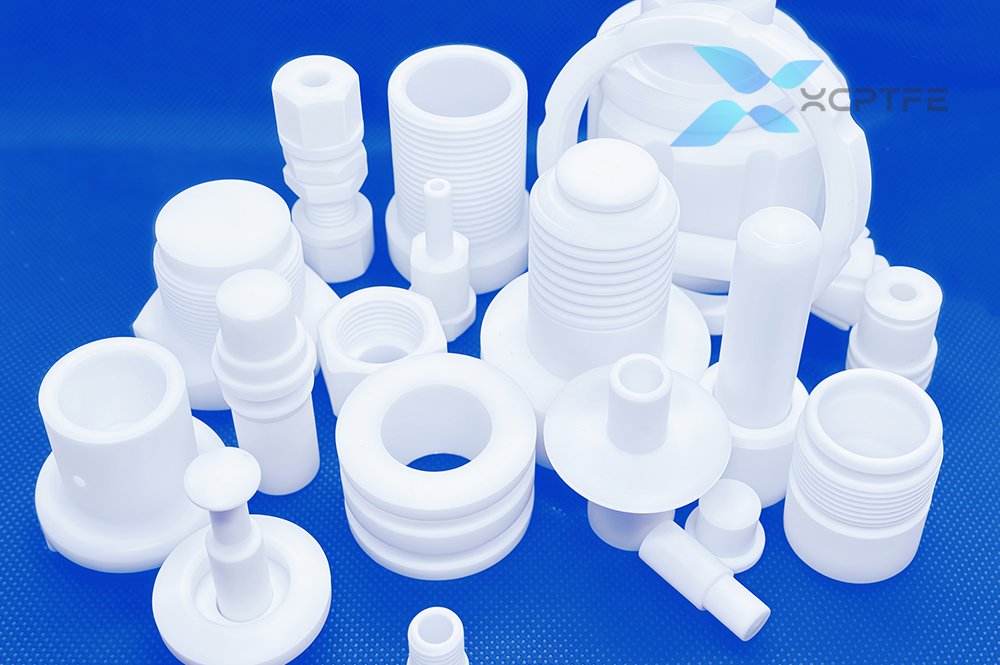
Fluoroplastics are processed into moulding raw materials, and the desired shapes are formed by placing them in moulds and subjecting them to heating, pressure, etc. These materials are often used in the manufacture of pipes, plates and other products.
- Extrusion molding method
Fluoroplastics are inserted into the extruder and the desired shape is formed through the application of heat and pressure. They are frequently used in the manufacture of products such as profiles and films.
- Injection molding method
The processing of fluoroplastics involves their transformation into granular raw materials, which are then introduced into injection molding machines. They are formed under high pressure and high temperature, and are often used to make workpieces, parts and other products.
- Applicationfields of fluoroplastics
Fluoroplastics are extensively utilized in a variety of industries, including chemical engineering, electronics and aviation, due to their exceptional corrosion resistance, durability and resistance to high temperatures. The key application areas are as follows.
- Chemical industry
Fluoroplastics are extensively used in the production of reaction vessels, storage tanks, pipes, valves and other apparatus. The material can be utilized in chemical environments comprising corrosive media, such as strong acids, strong alkalis and elevated temperatures.
- Electron industry
Fluoroplastics are extensively utilized in the electronics sector, particularly for the fabrication of insulating materials and high-frequency wires.
- Aerospace field
Fluoroplastics are widely used in the aerospace field due to their high temperature resistance, making them ideal for use in aircraft engine components and guidance systems, among other applications.
In conclusion, fluoroplastics have broad application prospects in the industrial field due to their excellent corrosion resistance, anti-aging property and high-temperature resistance. As technology continues to develop, there will be an increasing range of applications for fluoroplastics.