
 Shop
ShopTypes and Processing Procedures of PFA Joints
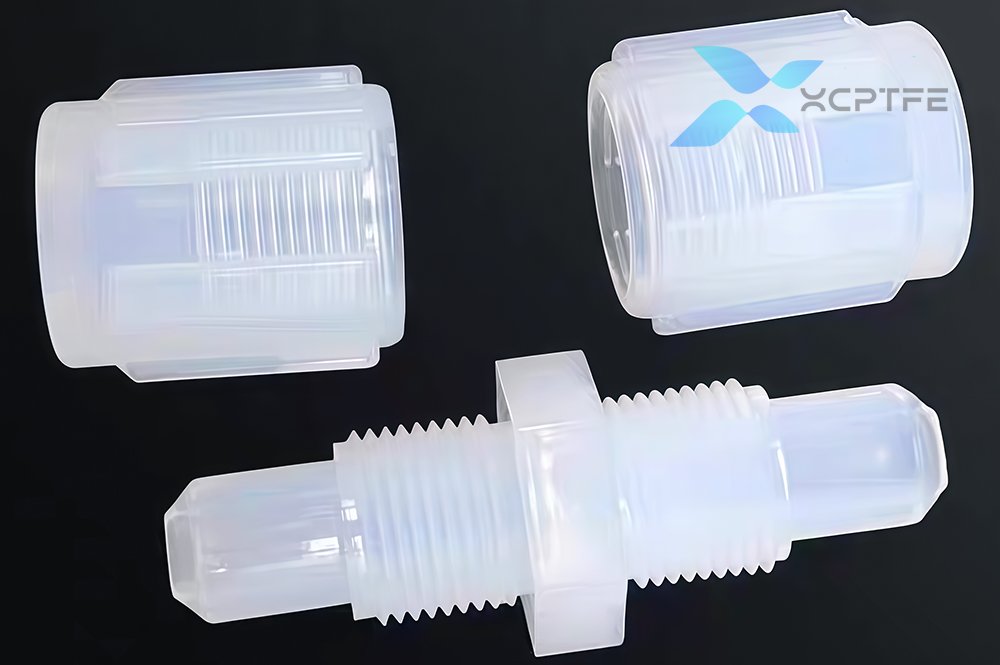
Sep
- Introduction of PFA
PFA, or perfluoroalkoxy alkanes, is also referred to as tetrafluoroethylene-perfluoroalkoxy vinyl ether copolymer, and soluble poly tetrafluoroethylene. The chemical properties of PFA are comparable to those of FEP and PTFE. However, FEP is only compatible with temperatures below 200° and PTFE cannot be injection molded. PFA is widely regarded as having the most optimal properties of all fluoroplastics, making it a preferred choice in numerous industries, including the semiconductor sector, as well as medical, chemical, anti-corrosion, automotive and other domains.
- The main types of PFAjoints
PFA accessories, PFA ferrule fitting, PFA reducing joint, PFA pipe joint, PFA straight-through joint, PFA tee joint, PFA elbow joint, PFA reducing tee joint, PFA reducing straight-through joint.
- The processing proceduresof PFA joints
- The welding process of PFA pipes
Firstly, ensure that the two ends to be welded are fixed relatively within the fixture of the welding equipment, and set a double-sided heating plate in the space between the two ends. It has been noted that during the heating phase, the heating plate will not come into direct contact with the pipe ends. Instead, the two pipe ends to be welded will reach the melting temperature by means of heat radiation. When the optimal temperature for melting the PFA pipes has been achieved, the heating plate should be promptly removed. Ensure that the two welding ends are brought into contact quickly and that a certain pressure is applied to melt the end of the PFA pipe and form a mixed weld. Following complete cooling, the original edge surfaces of the pipes become invisible and the two ends are connected.
- PFA joint flange protection cover
This innovative flange protection cover consists of two separate protection covers that are fixed by internal threaded holes at both ends of the diameter. Additionally, the upper and lower ends of the protection covers are equipped with pipe arc-shaped plates for effective pipe sealing.
The inner wall of the protective cover is equipped with a sealing plate. Different sealing structures have been set at various points, including the sealing plate, the mating surface of the protective cover and the outer edge of the protective cover, to prevent liquid from splashing inside the protective cover from leaking again. The concave design ensures that the screw fastening method does not increase the installation space occupied by the protective cover. The multi-layer sealing structure significantly improves the sealing performance of the protective cover, ensuring optimal safety when used.
- Other types of joints
- Quick joints
A quick joint is a type of connector that enables the swift and direct connection and disconnection of pipes without the requirement for tools. Quick joints can be classified as: quick joint for air, quick joint for oxygen fuel and gas, quick joint for both gas and liquid, quick joint for oil pressure, quick joint for inert gas, quick joint for cooling water, quick joint for semiconductor.
- Pneumatic connectors
The pneumatic quick connect is a type of quick joint that is primarily used for air piping and pneumatic tools. It facilitates the connection or disconnection of pipes without the need for tools. The stainless steel balls roll outward automatically. It should be noted that the pipes are disconnected as a result of the combined force exerted by the spring valves. In this instance, two valves closed on each other and consequently separated the pipes, thereby instantly blocking the fluid flow.