
 Shop
ShopFluoropolymer 3D Printing Revolution
02
Mar
Mar
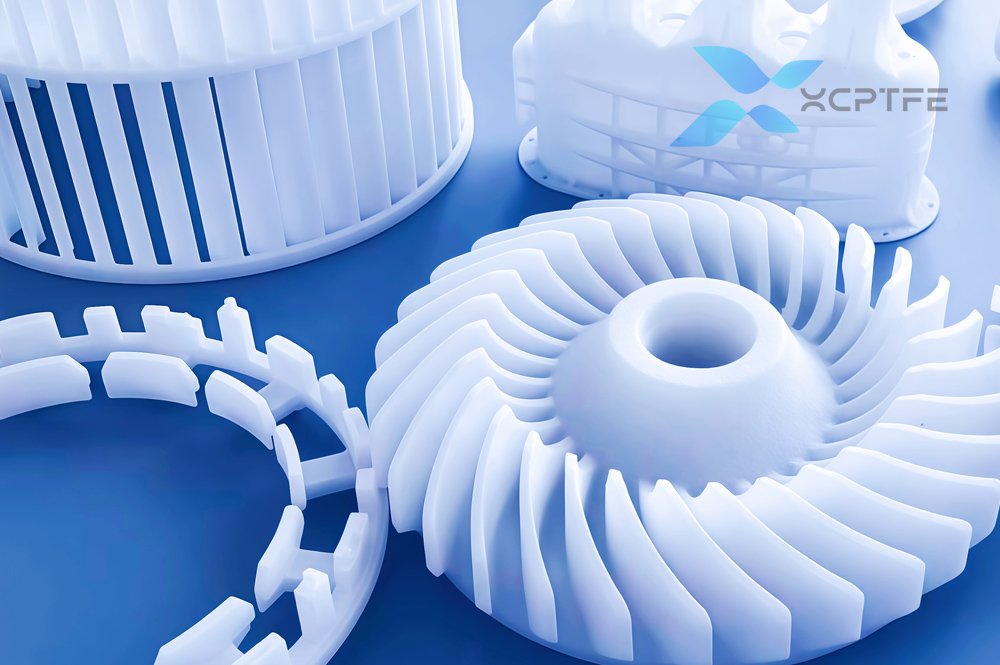
For decades, fluoropolymers like PTFE (Teflon), FEP, and PFA have been the gold standard for applications demanding extreme chemical resistance, thermal stability, and non-stick properties. From chemical processing seals to biomedical implants and aerospace components, these materials are indispensable. Yet, their very nature—inert, non-stick, and high-melting—has made them nearly impossible to process with conventional 3D printing techniques. Until now.
As of 2026, the landscape of fluoropolymer additive manufacturing is undergoing a seismic shift. Driven by patent-pending technologies, novel material formulations, and a deeper understanding of polymer physics, engineers are finally unlocking the potential to print the “unprintable.” This is the state of the art.
The Material Revolution: Beyond PTFE Filament
The core challenge has always been adhesion—how do you get a material designed to repel everything to stick to a print bed or a previous layer? The industry is answering this with two distinct strategies: modified materials and direct processing.
1. Fully Fluorinated Direct Printing (The PTFE Breakthrough)
The most significant leap comes from industry giants like 3M and its subsidiary Dyneon. They have developed a patent-pending technology to 3D print fully fluorinated polymers, including PTFE. This is a game-changer because it allows for the fabrication of complex structures that were previously impossible or prohibitively expensive to produce via traditional molding or machining. This process enables on-demand manufacturing of custom PTFE seals, liners, and spare parts, dramatically accelerating design cycles and reducing the need for physical tooling.
2. Photopolymer Resins for High-Precision Parts
In the realm of high-resolution printing, researchers are developing specialized fluorinated acrylate resins for VAT photopolymerization (DLP/LCD). These materials achieve remarkable elasticity (over 500% elongation) while maintaining chemical resistance, making them ideal for microfluidic devices with integrated valves and pumps. Furthermore, FEP (fluorinated ethylene propylene) films have become the standard for the release layer in these printers, where their high light transmittance and low adhesion are critical for successful prints.