
 Shop
ShopFEP Fluoroplastics – A Comprehensive Analysis of Properties and Applications
Mar
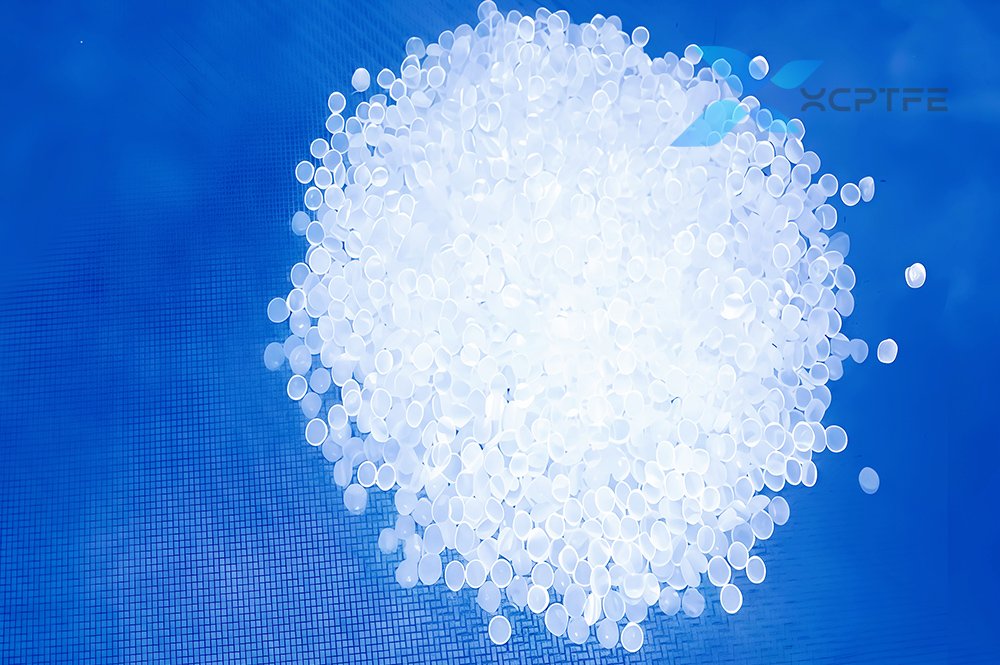
FEP (fluorinated ethylene propylene copolymer) is a thermoplastic fluoroplastic with excellent performance. It is copolymerised from tetrafluoroethylene (TFE) and hexafluoropropylene (HFP), inheriting the excellent properties of polytetrafluoroethylene (PTFE) while also featuring better processability.
- Core properties
FEP materials possess a series of superior physical and chemical properties, which enable them to perform outstandingly in harsh environments.
- Excellent temperature resistance
Its operating temperature range is extremely wide, typically from -200°C to +205°C, with the capacity to withstand higher temperatures in the short term. The melting point of FEP materials is approximately 260-304°C.
- Super chemical stability
As with PTFE, FEP is highly chemically inert and can resist the erosion of most chemical substances, including strong acids, strong alkalis and organic solvents.
- Outstanding non-conductive performance
Its extremely low dielectric constant allows it to maintain stable non-conductivity within a wide frequency and temperature range, making it suitable for high-frequency applications.
- Excellent optical and surface properties
FEP is characterized by its high transparency and refractive index, which closely resembles that of water. Meanwhile, its surface friction coefficient is low, and it exhibits non-sticky and self-lubricating properties.
- Outstanding mechanical and safety performance
FEP material displays excellent flexibility and demonstrates strong resistance to bending and impact. In addition, it is flame retarding, thus preventing the spread of flames.
- Ease of processing
In comparison with PTFE, FEP has the advantage of being able to be processed by melting, with the potential to produce complex-shaped products through extrusion and injection molding processes.
- Main applications
As demonstrated above, FEP boasts a wide range of applications in various industrial sectors.
- Wires and cables
It is widely used in high-frequency data transmission cables and non-conductive layers of aerospace cables.
- Semiconductorsand chemical engineering
Its primary function is the production of pipelines for the transportation of high-purity chemicals, the lining of storage tanks and a wide variety of sealing parts.
- Medical devices
Its attributes, which include high purity, disinfection resistance and biocompatibility, make it a frequently used material in medical device catheters and heat shrink tubes.
- Other industries
Flexible printed circuits, solar panel films and transparent observation windows.
FEP material is a key engineering plastic, due to the balanced combination of its corrosion resistance and processability, which is regarded as an irreplaceable functional material within modern, high-end manufacturing industries.